A Refreshing Look Back
Metric vs Early Non-Metric Units of Time
- S.E.
What about Decimalized Time? Yes the French Tried it - No Joke !
Imagine meeting your dinner date at 8:12.50?
The desire for consistent decimal systems even extended to time. During the French Revolution in 1793, France introduced a fully decimal time system. A day was divided into 10 hours, each hour into 100 minutes, and each minute into 100 seconds.
|
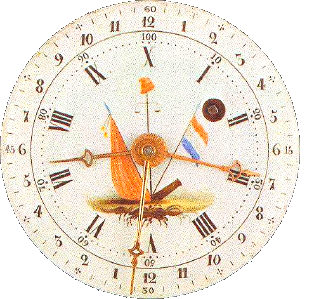
Although mathematically logical, the system failed quickly. People struggled to adapt, and traditional 24-hour clocks were already deeply embedded in daily life. After only a few years, decimal time was abandoned. You can get an idea of what Napoleon thought about this because in 1806, he officially abolished decimal time and restored the traditional 24-hour day.
Traces of this system still exist today in historical artifacts. Examples of decimal-time clocks can be found at the Louvre Museum in Paris and at the Smithsonian in Washington, to name a few. These serve as reminders that even logical systems must step aside for human culture.
One More Thing - Fun Thing
This metric time thing intrigued me. I was wondering what it would look like in a digital clock format. I know what AI can do, so I asked ChatGPT to code me a digital clock of a 10 hour day, 100 minutes to an hour and 100 sec to a minute. It is below.
As a example, a typical 24 hour clock
9:00am Noon 12:45pm 4:15pm 7:30pm (dinner date)
The old French metric would be……
03:75:50 05:00:00 05:31:25 06:77:08 08:12:50
I can see why the French went nuts and Napoleon shut it down.